Failure is expensive.
We identify AI exposure
before it becomes liability.
Private AI Advisory
Institutions · Founders · Family Offices
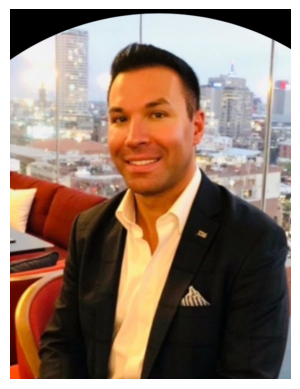
Craig Bracken
Hybrid
Operator before advisor.
Builder. Operator. Advisor.
Craig Bracken's perspective spans technology, AI, operating companies, institutional advisory, regulated environments, and deployment. His thinking was formed through building and operating mission-critical systems where failure carries real cost.
The advisory practice exists because the gap between model performance and institutional safety is where exposure actually lives — and most organizations discover that gap after a liability event, not before.
Operating Credentials
AI Exposure Intelligence™
Understanding where intelligence becomes consequence.
Model
What can the system understand or generate? The capability boundary defines the first layer of exposure — not because of what the model does, but because of what the institution assumes it can do.
Access
What information and systems can it reach? Access determines blast radius. A model with read access to customer data and write access to operational systems has a fundamentally different risk profile than one confined to a sandbox.
Authority
What decisions is it permitted to influence or make? Authority is where recommendation becomes action. Every increment of autonomous authority without a corresponding recovery mechanism is net new institutional exposure.
Action
What can it execute? The distance between a model output and an operational action is where liability crystallizes. A system that can act without a human checkpoint is a system that can fail without a human witness.
Consequence
What happens when it is wrong? Consequence is the measurable cost — operational, regulatory, financial, reputational — that the institution absorbs when the system fails. Most organizations cannot quantify this before it happens.
Recovery
Can the institution detect, contain, reverse, and learn from the failure? Recovery is the architecture that turns a crisis into an incident. It is the least designed layer and the most consequential.
Built through deployment,
not observation.
Craig's thinking was shaped through building and operating systems — not merely studying them. Selected operating notes from the field.
CB Intelligence
Operational intelligence for consequential AI.
When the consequence is material,
the conversation changes.
Craig works with organizations where AI decisions intersect with capital, operations, regulation, reputation, governance, and enterprise risk.
Family Offices
Portfolio AI exposure, operating-company intelligence, technology diligence and governance questions.
Institutions
Authority architecture, deployment exposure, governance and consequential AI operations.
Founders
Preparing AI companies and AI-enabled businesses for institutional scrutiny, enterprise deployment and consequential scale.
AI can move faster than
the organization governing it.
The question is not simply what the system can do. The question is what it should be allowed to do, what happens when it is wrong, and whether the organization can recover.